
|
Hafei
|
Country
|
China
|
Parent
|
ChangAn
|
Subsidiaries
|
-
|
Brands
|
Hafei
|
| Location |
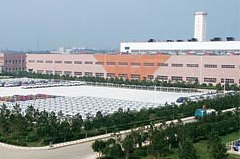
Headquarters and main assembly
plant: Harbin
|
Sales figures
|
2012: 45,942 units
2011: approx. 125,000 units
2010: 154,000 units
2009: 240,000 units
2008: 226,754 units (production)
2007: 243,000 units
2006: 267,000 units
2005: 230,000 units
2012 domestic sales by models:
Lobo: 4,878 units
Lobo Saima (Mitsubishi Dingo): 1,987 units
Lobo Saibao: 361 units
|
| Introduction |
Hafei, shortwrite of "Harbin Aircraft", is a subsidiary of a
state-owned aircraft manufacturer located in Harbin, Northeast China.
It used to be renowned for making cheap mini cars, which were popular
in the China market. However, in recent years its small cars are facing
intense domestic competition and cost pressure for meeting stricter
emission and safety standards. Failing to raise its game, Hafei became
a victim of the industry's consolidation. Since its acquisition by
ChangAn in 2009, it experienced a dramatic decline in sales. By the
time of writing it is already clear that its name will disappear from
the market soon.
|
Brief History
|
Following the economic reform in 1978, the Chinese
government encouraged state-owned military industries to turn to
civilian production and reduce reliance on government incentives. As a
result, Harbin Aircraft
Manufacturing
Corporation decided to open a motor car division. It introduced
Japanese technology from Suzuki and built its first commercial minivan
in 1982. By 2000, Hafei Auto was already producing 120,000 units of
mini vans and trucks a year.
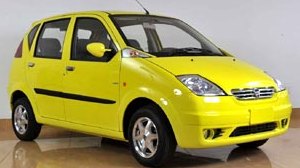 Lobo (2002) Lobo (2002)
In the next phase of expansion, Hafei collaborated with Pininfarina to
develop its first passenger car, the 1.0-liter class Lobo minicar
(2002), which was once the best selling mini car in China. However, the
company failed to expand into higher segments. The 2005 Saibao sedan -
a 1.6-2.0-liter car developed again jointly with Pininfarina - lacked
quality to make a mark in the fast-rising domestic car market. Hafei
failed to keep up with the competition in the late 2000s.
In 2009, Hafei and Jiangxi Changhe motors, another subsidiary
of its mother company, were acquired by the much larger ChangAn.
However, this did not help turning around it. Hafei made substantial
losses in the next few years as its sales slid drastically. It stopped
developing its own cars and turned its factory to produce for ChangAn.
By the end of 2013, Hafei was virtually dead.
|